Hybrid-SACD - UDSACD 2307 Read more.
1. Cat’s In The Cradle
2. I Wanna Learn A Love Song
3. Shooting Star
4. 30,000 Pounds Of Bananas
5. She Sings Songs Without Words
6. What Made America Famous?
7. Vacancy
8. Halfway To Heaven
9. Six String Orchestra
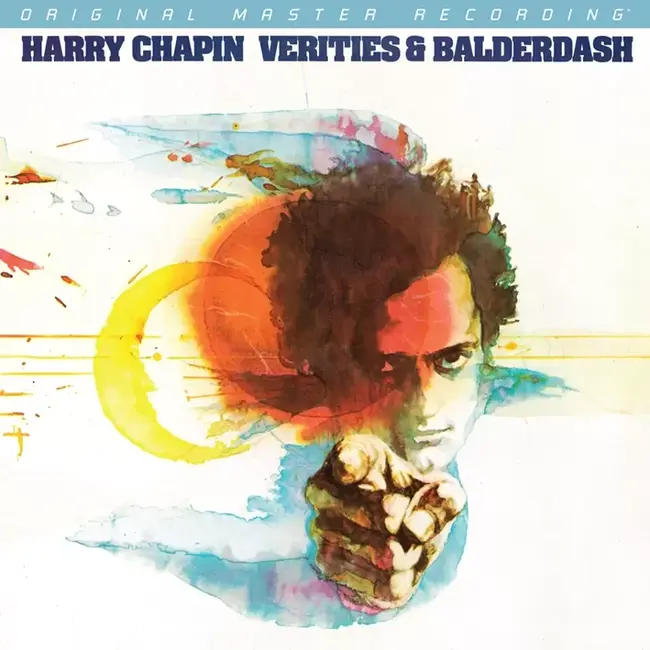
The title track from Harry Chapin’s fourth album “Verities & Balderdash” is so timeless that it became the subject of a 2025 documentary in which artists from several generations discuss its influence on their lives and work. “Cat’s In The Cradle” undoubtedly remains the highlight of the singer-songwriter’s 1974 album. The legendary opening track also serves as a guide to the bold personal and social themes that follow – as well as to the beautiful folk-rock arrangements underpinning the New Yorker’s most commercially successful work. The album “Verities & Balderdash” was warmly received by audiences and critics alike and achieved double-platinum status. “Cat’s In The Cradle” reached No. 1 on the singles chart and was inducted into the Grammy Hall of Fame. The romantic ballad “I Wanna Learn A Love Song” made the Top 50.
The mini-epic “What Made America Famous?”, also released as a single, helped establish Chapin as one of the nation’s most perceptive and sensitive lyricists, as “Verities & Balderdash” was filled with contemporary themes and vivid snapshots of everyday life. Chapin observes everything from national polarization to shifts in moral standards and cultural priorities. Both singer and storyteller, Chapin conveys a rich spectrum of emotions. As the centerpiece of a career tragically cut short by a fatal traffic accident, “Verities & Balderdash” stands as a prime example of his craftsmanship, intuition, and the distinctive perspective he brought to American music.
MFSL now presents the Top-5 album “Verities & Balderdash” for the first time in audiophile reference quality: mastered at the MoFi studio in California, the strictly limited and numbered Hybrid SACD edition of 2,000 copies sets new standards in spaciousness, transparency, headroom, and dynamics, bursting with tonal color and detail. When Chapin lists the instruments in “Six String Orchestra,” they appear almost magically, as if the band were performing just a few meters away.

Find the order you'd like to withdraw
Enter your email address and order number.
Check your mailbox
If your details match an order, you'll receive an email with a link to view and manage it.