
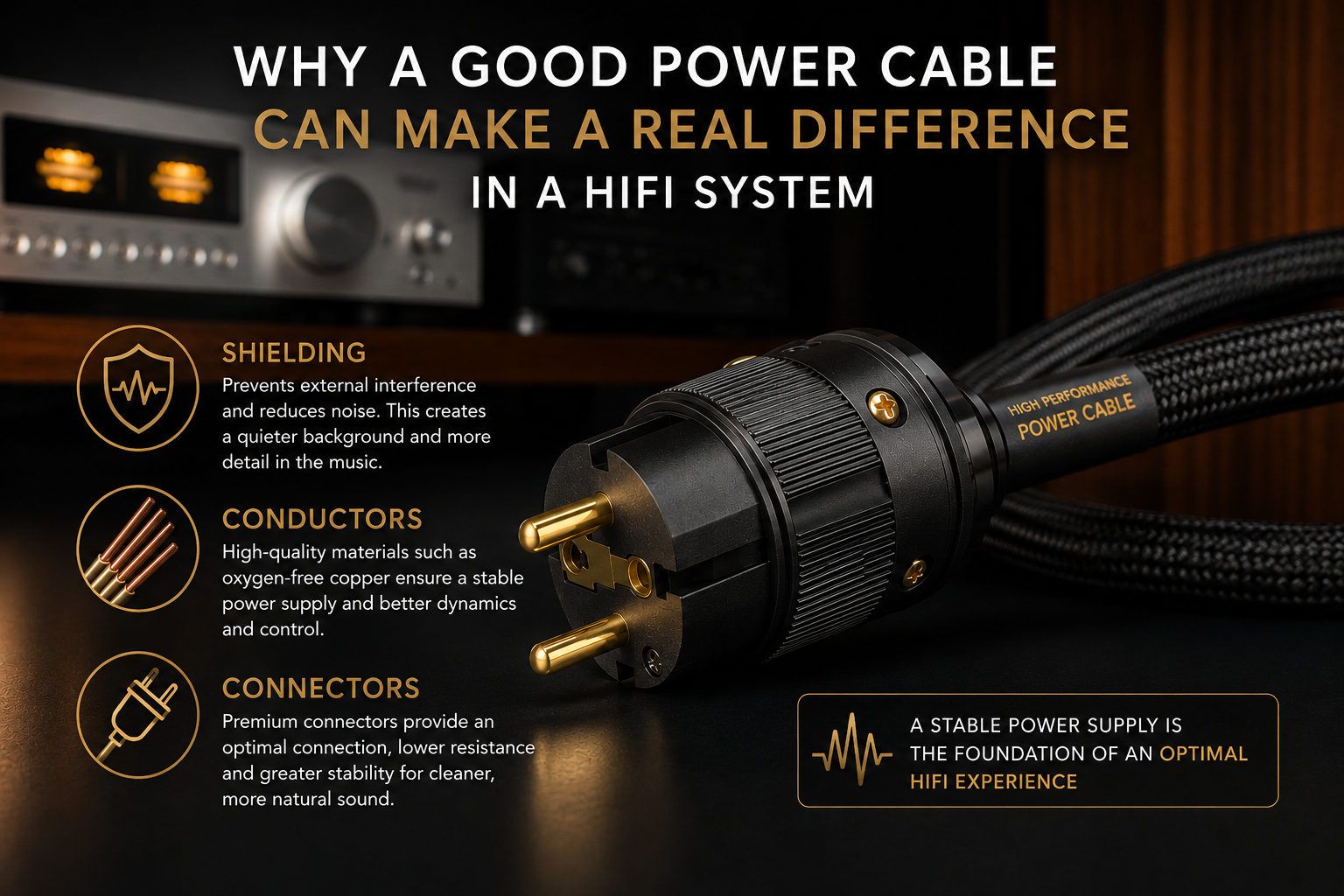
Why a high quality power cable really can improve a hifi system
Anyone investing in a high quality hifi system naturally wants to get the very best possible listening experience. Yet one component is still frequently underestimated and that is the power cable. Many people assume every power cable performs exactly the same task as long as electricity reaches the device. In reality the situation is far more complex. A well designed power cable can contribute to a cleaner power supply, lower interference levels and more stable energy delivery to sensitive audio components. Especially with premium amplifiers, DACs, streamers and turntables this can result in audible improvements in detail, control and overall musical presentation.
Modern homes are filled with electronic devices such as routers, LED lighting, chargers and wireless systems. All of these create electrical noise and electromagnetic interference on the mains supply. Standard power cables are generally designed to be inexpensive and often provide very little protection against external interference. High quality hifi power cables on the other hand are specifically engineered to minimise these unwanted effects and deliver cleaner power to audio equipment. This can help a system sound calmer, more refined and more natural.
What shielding actually does
Shielding is one of the most important parts of a premium power cable. Its role is to prevent electromagnetic interference from entering the cable while also reducing the amount of noise radiated by the cable itself. This becomes especially important when power cables run close to signal cables or speaker cables inside a hifi setup.
Premium manufacturers often use braided copper shielding, aluminium foil shielding or a combination of both. These construction methods reduce high frequency interference that could otherwise affect sensitive digital and analogue components. Many listeners notice a quieter background, improved stereo imaging and more natural vocals when interference levels are reduced.
Why conductor quality matters
The conductors inside a power cable carry the electrical current to the equipment. Budget cables often use lower purity copper while premium designs use oxygen free copper or silver plated conductors. Higher purity materials reduce electrical resistance and improve conductivity.
Power amplifiers in particular can demand large amounts of current during dynamic musical peaks. A cable with low resistance and high quality conductors can deliver this energy more efficiently and consistently. The result may include tighter bass response, improved dynamics and greater control across the frequency range. Vocals and instruments can also sound more refined and focused.
Connectors are more important than many realise
The connectors at each end of a power cable are equally important. They form the physical connection between the mains supply and the audio component. Poor quality connectors can introduce resistance, voltage instability and even tiny sparks that generate unwanted noise.
High quality connectors are often made from solid copper or advanced copper alloys with gold or rhodium plating. They are also engineered for a tighter mechanical fit and better contact stability. In high performance hifi systems these small details can contribute to a cleaner and more relaxed listening experience.
Subtle improvements that become clearly noticeable
A premium power cable will not completely transform a weak audio system into a reference level setup. However many music enthusiasts experience noticeable improvements such as lower background noise, improved detail retrieval, tighter bass and a more spacious presentation. These differences are often easiest to hear in carefully assembled high quality systems.
A well designed power cable is also a long term investment. Thanks to better materials, superior build quality and durable connectors, it can remain part of a hifi system for many years. For listeners who value refinement and musical realism, optimising the power supply is often a logical next step in achieving the best possible performance.


