
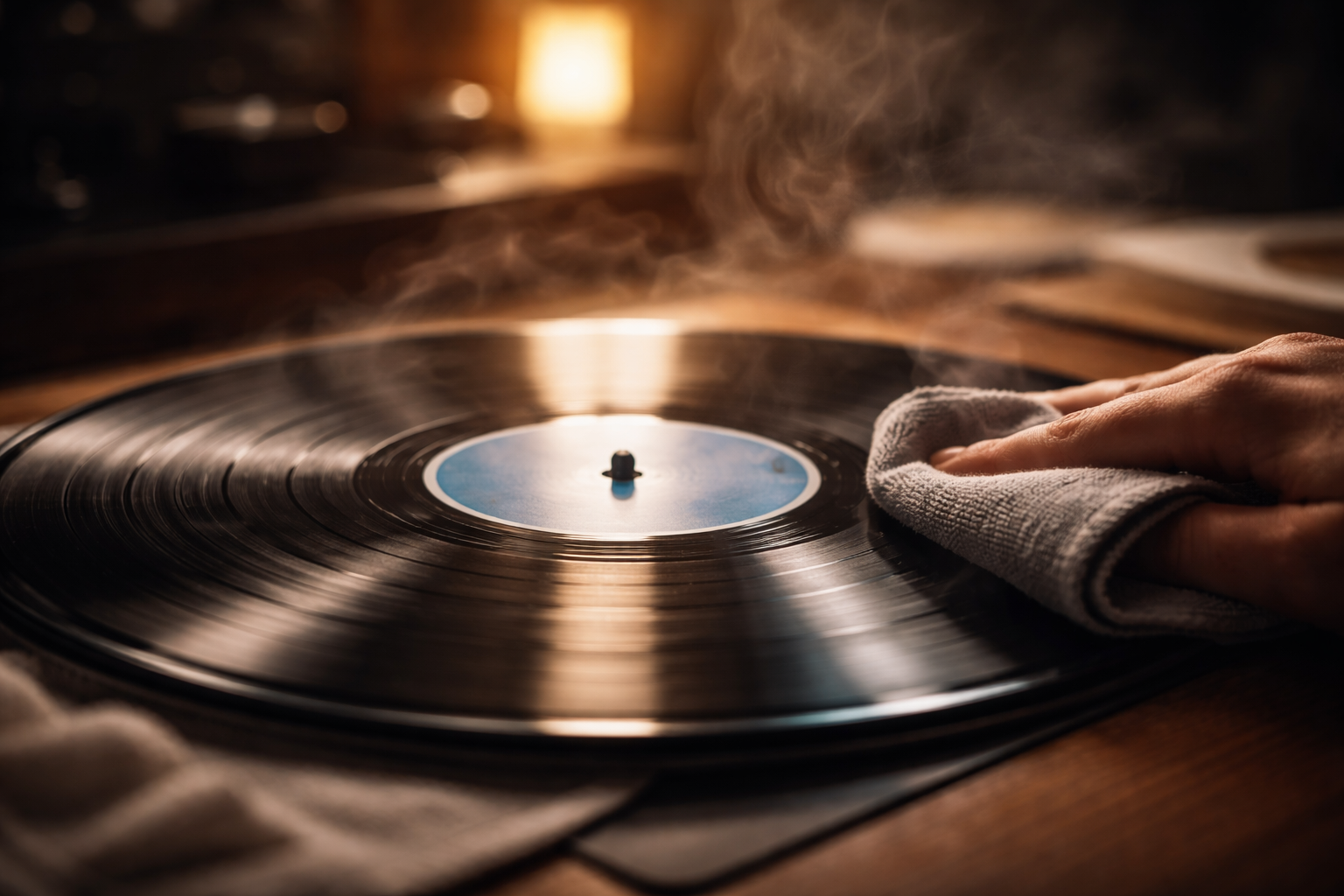
Cleaning records: what works and what does not?
A beautiful record collection deserves more than a good turntable and a carefully chosen cartridge. Dust, fingerprints and residue from old inner sleeves can slowly gather in the groove, causing clicks, surface noise and a less open sound. Correct cleaning protects not only the record itself, but also the stylus that travels through the same groove again and again. The Library of Congress notes that careful handling is one of the simplest and most effective preservation measures for audiovisual materials, and recommends handling records by the edge and label area whenever possible.
A record brush is without doubt one of the most practical tools for everyday care. A good carbon fibre brush removes loose dust from the surface before playback and helps prevent dirt from being pushed deeper into the groove while the record is playing. It is important to understand, however, that a brush is not a miracle solution. Grease, dried residue, smoke deposits or dirt that has been sitting in the groove for years usually will not disappear with dry brushing alone. Move the brush calmly with the rotation of the record and avoid heavy pressure, because the goal is to collect dust rather than scrub the surface.
Cleaning fluids work best when they are designed for records and used correctly. Distilled or deionised water is a sensible base because it should not leave unwanted residue, while a suitable surfactant can help loosen greasy dirt. Preservation guidance for sound carriers explains that water alone does not dissolve grease well, which is why an appropriate additive can be useful. At the same time, the fluid must be removed completely after cleaning, because cleaner left behind in the groove can become a new source of noise.
A record cleaning machine becomes especially interesting when you regularly buy used records, own many older pressings or notice that dry brushing no longer brings enough improvement. Manual bath systems can loosen a lot of dirt, while vacuum machines have the advantage of actively removing dirty fluid from the record. That point matters, because loosened dirt can otherwise dry back into the groove. Professional recommendations mention record cleaning machines because they can distribute fluid evenly and then vacuum it away, leaving the surface clean and dry.
Ultrasonic cleaning can also produce very good results, especially with dirt that sits deeper in the groove. Its strength lies in tiny bubbles created in the liquid, which help loosen contamination without heavy rubbing. This method still requires common sense. Use a suitable fluid, follow the temperature guidance from the machine maker and allow for a proper drying stage. Some modern record cleaning fluids are deliberately alcohol free and made for record cleaning machines, with the manufacturer noting that alcohol can harm certain record surfaces.
What does not work well? Tap water is not ideal, because minerals and lime can leave deposits. Kitchen paper is also a poor choice, because it can shed fibres and is not made for the fine structure of a record groove. Household sprays, glass cleaner, vinegar, general purpose cleaners and random alcohol mixtures do not belong on a valuable record. Extra care is needed with 78 rpm records and shellac, because not every disc is vinyl and not every fluid is safe for every material. Always choose a cleaner that is explicitly suitable for the carrier in front of you.
Many common mistakes come from rushing. Putting a wet cleaned record straight back into an old dusty inner sleeve wastes much of the work. Playing a record while moisture remains in the groove is also unwise. A good routine means letting the record dry fully, using a clean antistatic inner sleeve where possible and cleaning the stylus according to the instructions from its maker. In that way, record cleaning becomes more than an occasional rescue attempt. It becomes a steady habit that helps your collection keep its clarity for longer.
The best approach is therefore easy to understand. For new and well cared for records, a calm brush before playback is usually enough. For used finds, visible dirt and stubborn crackle, wet cleaning is the better choice. For larger collections or anyone who often buys pre owned records, a record cleaning machine is a very logical investment. By working safely, avoiding aggressive household products and storing each record only when it is fully dry, you gain more listening pleasure without taking unnecessary risks.


